Solids separation
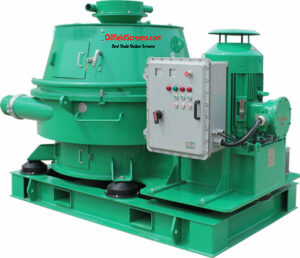
Shale shaker
Separate drilled cuttings at the first mechanical screening stage while recovering drilling fluid.
View selection detailsBrowse existing products and screen references across screening, separation, mixing, slurry systems and waste treatment.
Separate drilled cuttings at the first mechanical screening stage while recovering drilling fluid.
View selection detailsCombine hydrocyclone separation with fine screening of the cone underflow in a compact process stage.
View selection detailsUse hydrocyclones to separate a coarser solids fraction from a suitable drilling fluid or slurry feed.
View selection detailsTreat a finer solids fraction with smaller hydrocyclones where the fluid program and separation objective support their use.
View selection detailsSeparate suspended solids using a rotating bowl and differential-speed conveyor, with settings matched to the fluid-treatment duty.
View selection detailsRemove entrained gas from drilling fluid using a vacuum-assisted process selected for the system duty.
View selection detailsUse a centrifugal gas-removal arrangement where suited to the drilling-fluid process.
View selection detailsProvide a purpose-designed vessel for separating gas from returning drilling fluid within an engineered gas-handling arrangement.
View selection detailsTransfer drilling fluid or supply separation and mixing equipment at a defined flow and head.
View selection detailsDeliver a controlled feed to the centrifuge with a pump suited to the slurry and turndown requirement.
View selection detailsMaintain suspension and fluid consistency in a tank using an impeller and drive matched to the tank and mud.
View selection detailsIntroduce powdered additives into the circulating fluid through a hopper and mixing arrangement.
View selection detailsApply controlled shear during fluid preparation when required by the additive and mixing program.
View selection detailsCirculate fluid through directed nozzles to support movement in tank areas that need additional mixing.
View selection detailsProvide storage, treatment and working volume for the drilling-fluid process with suitable compartments and equipment interfaces.
View selection detailsCoordinate bulk storage, mixing, treatment and transfer for drilling-fluid supply and recovery.
View selection detailsConnect screening, fluid conditioning, tanks and transfer equipment into a project-specific drilling-fluid package.
View selection detailsRecover usable drilling fluid from suitable HDD and coalbed-methane returns using an integrated recycling arrangement.
View selection detailsRemove sand and other separable solids from support slurry used in tunnelling and bored-pile operations.
View selection detailsProcess excavation slurry through staged separation and return conditioned fluid to the tunnelling circuit.
View selection detailsSeparate and manage excavation slurry with a treatment arrangement based on incoming waste composition.
View selection detailsTreat a defined mining-process slurry using separation equipment selected for its solids and liquid properties.
View selection detailsConcentrate solids and recover liquid from dredged slurry using a suitable separation and dewatering process.
View selection detailsUse inclined settling surfaces for clarification where the solids and liquid support gravity separation.
View selection detailsSpecify mechanised washing and liquid-handling equipment around the tank geometry, residue and cleaning objective.
View selection detailsCoordinate cuttings collection, transfer, fluid recovery and containment from shaker discharge to the receiving point.
View selection detailsRecover liquid from a suitable cuttings stream using a purpose-selected centrifugal drying process.
View selection detailsRecover additional liquid from an appropriate wet-solids stream with a secondary screening stage.
View selection detailsMove cuttings or separated solids through a defined route with a conveyor matched to material behaviour.
View selection detailsTransfer suitable wet solids or sludge through a vacuum-assisted system with defined utility and discharge conditions.
View selection detailsReduce suspended solids and manage liquid recovery using a treatment package suited to the mud chemistry.
View selection detailsConcentrate solids from an identified waste stream with a centrifuge selected for separation and wear duty.
View selection detailsAssess separation and conditioning equipment for an identified oil, water and solids mixture.
View selection detailsSeparate two immiscible liquid phases and solids where the feed and process conditions allow effective three-phase separation.
View selection detailsEvaluate a hydraulic drive arrangement for bowl and conveyor control against the intended centrifuge duty.
View selection detailsAssess a vacuum-assisted fluid-recovery arrangement for compatibility with an existing shaker and its discharge system.
View selection detailsSpecify a framed screen panel by its physical interface, separation designation and service conditions.
View selection detailsCompare composite-frame replacement panels using exact fit, tested screen characteristics and operating requirements.
View selection detailsIdentify a profiled screen panel by compatible shaker, tensioning interface and documented separation characteristics.
View selection detailsMatch a tensioned screen by the hook geometry, overall dimensions and shaker mounting system.
View selection detailsSpecify a polymer screening panel for the material, aperture and mounting arrangement used in the process.
View selection detailsUse the API designation and supporting test information to compare screen separation characteristics.
View selection detailsMatch replacement panels to the exact Brandt model and deck, including VSM 300 and other established equipment families.
View selection detailsIdentify screen requirements for the exact M-I SWACO shaker model, generation and installation arrangement.
View selection detailsSpecify a replacement screen by the exact Derrick equipment family, panel reference and tensioning interface.
View selection detailsDefine an equipment control panel from the electrical load, control philosophy and project hazardous-area requirements.
View selection detailsSelect a junction box with the correct terminals, entries and protection arrangement for the installation.
View selection detailsMatch starter functionality and protection to the motor, supply and hazardous-area design basis.
View selection detailsSpecify a variable-frequency drive enclosure with the required thermal management and protection arrangement.
View selection detailsEvaluate this bowl-size class against the required centrifuge duty, feed properties and site installation. Nominal size alone does not define a separation result.
View selection detailsEvaluate this bowl-size class against the required centrifuge duty, feed properties and site installation. Nominal size alone does not define a separation result.
View selection detailsEvaluate this bowl-size class against the required centrifuge duty, feed properties and site installation. Nominal size alone does not define a separation result.
View selection detailsEvaluate this bowl-size class against the required centrifuge duty, feed properties and site installation. Nominal size alone does not define a separation result.
View selection detailsEvaluate this bowl-size class against the required centrifuge duty, feed properties and site installation. Nominal size alone does not define a separation result.
View selection detailsVSM 300 primary screens provide the main fine-screening stage after the scalping deck. Identify the exact primary panel reference and required API designation before comparing replacement offers.
View selection detailsThe scalping stage removes larger material before the primary screens. Use the equipment deck reference and existing panel identification rather than ordering by mesh alone.
View selection detailsDrying-deck panels serve a different position from the primary and scalping panels. State the drying or secondary duty and send the existing reference for a dimensional check.
View selection detailsMatch a profiled replacement screen to the FLC 2000 or identified 48-36 equipment using the existing screen part number, panel geometry and tensioning details.
View selection detailsIdentify the required flat-panel replacement for the exact FLC 2000 or 48-36 shaker configuration. Compare mounting geometry and test information alongside the API designation.
View selection detailsSpecify the exact 500 Series shaker and flat-panel reference to match the screen and tensioning interface before reviewing separation characteristics.
View selection detailsIdentify the exact King Cobra or Hybrid equipment configuration and installed screen reference before selecting a replacement panel.
View selection detailsSource a replacement screen for the identified BLT-50 or LCM-2D installation using an existing part number and measured mounting details.
View selection detailsMatch the replacement screen to the installed Brandt equipment using the panel reference, edge profile and attachment arrangement.
View selection detailsReview D380 or D285P screen requirements by exact machine identification, current panel reference and the separation duty.
View selection detailsIdentify the precise Mongoose or Meerkat generation and screen reference. Check the panel construction, locking interface and required API designation together.
View selection detailsSpecify the exact MD-2 or MD-3 machine and deck position so the panel reference and operating requirement can be checked before quotation.
View selection detailsBuild a Mamut replacement-screen enquiry around the current part number, frame dimensions and mounting details.
View selection detailsMatch ALS-2 screen requirements using the actual shaker and panel identification, including tensioning and edge details.
View selection detailsIdentify the exact KTL 48 equipment and panel arrangement before comparing a replacement screen.
View selection detailsSpecify KPT 28 screen requirements with the existing part number, measured panel geometry and service conditions.
View selection detailsSeparate Prima 3G, 4G and 5G requirements by the actual machine generation and installed screen reference.
View selection detailsNo matching entries. Try fewer words or send the model or part number.
Send what you have. Include quantity, delivery destination and the operating duty.